
FAQs: 2025/2026 Implementation of Q-Mark EN 13501-2 Schemes
Looking for More Information?
Contact our Team
On 2nd September 2024, the UK Government confirmed that the National Classes fire testing standards will be withdrawn from Approved Document B (England) in favour of the EN 13501 series of European classification standards. A transition period of 5 years was given by the UK Government for fire-resisting construction products, meaning products such as fire-resisting doorsets will need to be classified to EN 13501-2 for the relevant performance characteristics by 2nd September 2029.
In response, BM TRADA has developed new Q-Mark fire door and doorset manufacturing schemes and updated existing schemes to accommodate EN 13501-2 classification including fire resistance and smoke control performance.
To support these schemes, we have prepared technical information sheets that explain how the schemes work alongside additional information on acceptable forms of supporting evidence. Following a period of consulting with customers on the new and updated schemes, we have also collated the following frequently asked questions, which are to be read together with the technical information sheets. These documents provide guidance only. For specific detail, please refer to the relevant BM TRADA scheme technical document.
If you still have any remaining questions, please contact us directly via your BM TRADA or Warringtonfire representative.
FAQs – Scheme Definitions
‘Original’ Schemes – Our schemes in existence prior to launch of 2025/2026 EN 13501-2 schemes.
‘New’ Schemes – Our EN 13501-2 schemes developed in 2025/2026: Fire Doorset Manufacturing (EN 13501-2) and Fire Door Processing (EN 13501-2).
‘Updated’ Schemes – The Q-Mark Systems House Scheme has been updated to accommodate the EN classification system (EN 13501-2) but will also continue to be used for cascading evidence generated for use with other Q-Mark certification schemes that are based on BS and EN test standards.
GENERAL
Will your non-EN 13501-2 fire door schemes disappear or become obsolete in 2029?
No, these schemes still have a demand and a place in the market. Therefore, they will be available as long as there continues to be a need for them.
Why can’t you add EN 13501-2 classification into your original certification schemes?
The approach taken for testing and assessing fire doors in our original certification schemes cannot be merged with the methodology used for EN 13501-2 classification as there are fundamental differences between the two approaches. In response to the reforms to the construction products regime proposed by UK Government, we have developed separate schemes to ensure both clarity and transparency to our customers and the end market, providing solutions for manufacturers that need certification under the original schemes or EN 13501-2 classification.
FIRE DOORSET MANUFACTURERS
I currently supply silver plugged doorsets under the original Q-Mark Timber Fire Door Manufacturing Scheme. Will there be additional costs for me to maintain the same certification scope/output, or will I automatically be certified for both schemes?
The Q-Mark Fire Doorset Manufacturing (EN 13501-2) schemes are new. To manufacture doorsets under the new schemes, there will be a requirement for a new application with associated fees. However, it will be possible to conduct some Factory Production Control (FPC) verifications at the same time as those required under the original scheme and these efficiencies will be passed on as savings in time and cost.
Where clients reside in both an original certification scheme (e.g. Q-Mark Timber Fire Door Manufacturing Scheme) and one of the EN classification schemes (e.g. Q-Mark Fire Doorset Manufacturing (EN 13501-2)) with the same scope, discounted rates will be applicable. Where clients are transferring from one scheme to another, no additional subscription fees will be applied.
LEAVES, FRAMES & DOOR ASSEMBLIES
I don’t currently supply doorsets and this is permitted under the original Q-Mark Timber Fire Door Manufacturing Scheme (e.g. leaves and frames). Will BM TRADA provide additional certification for these products such that they can be used within door assemblies for EN 13501-2 classification?
Yes. The Q-Mark Fire Doorset Manufacturing (EN 13501-2) schemes were the first to launch and do not include certification for the manufacture of leaves, frames and door assemblies. However, BM TRADA has subsequently launched the Q-Mark Fire Door Processing (EN 13501-2) scheme to accommodate manufacturers of leaves, frames and door assemblies for EN 13501-2 classification.
I currently supply door leaves under the original Q-Mark Timber Fire Door Manufacturing Scheme. Will there be additional costs for me to maintain the same certification scope/output under the new Q-Mark Fire Door Processing (EN 13501-2) scheme, or will I automatically be certified for both schemes?
To operate under the new Q-Mark Fire Door Processing (EN 13501-2) scheme, there will be a requirement for a new application with associated fees. However, it will be possible to conduct some Factory Production Control (FPC) verifications at the same time as those required under the original scheme and these efficiencies will be passed on as savings in time and cost. Where clients reside in both an original certification scheme and one of the EN classification schemes with the same scope, discounted rates will be applicable. Where clients are transferring from one scheme to another, no additional subscription fees will be applied.
AUDIT TESTING
If I remain in an original Q-Mark Certification scheme and join one of the new EN 13501-2 schemes, will I be required to carry out additional fire resistance audit tests to meet the requirements of both schemes?
Where a manufacturer remains in an original certification scheme (e.g. Q-Mark Timber Fire Door Manufacturing Scheme) and joins one of the EN classification schemes (e.g. Q-Mark Timber Fire Doorset Manufacturing (EN 13501-2)) and the door type is of the same material and constructed using similar processes, there will be a requirement for three-year audits for fire, but the audit test will be used to cover both schemes. The audit test requirement will continue to be cycled through the different products on both scopes, as applicable, so over time all products are audited whilst verifying the manufacturer’s ability to construct doorsets.
A manufacturer that joins an EN classification scheme will be required to conduct their next audit test to the EN 1634-1 test standard, unless the manufacturer’s next audit test under the original scheme’s requirements is due within a year of joining the new scheme.
If you are in another Q-Mark scheme for a different doorset type (e.g. composite or steel), additional audit tests will be required. It is only possible to use one audit test to meet the requirements of both the original and EN classification scheme when the type of doorset and construction process is similar.
Do the new EN 13501-2 schemes remove the need to send any samples for initial and three-year audit testing when it comes to the smoke control characteristic?
Smoke testing is a requirement for pre-certification only where you are relying on a systems house. There is no ongoing requirement to audit test smoke control performance.
If you do not rely on systems houses but need smoke control included in your classification, a decision will be made by BM TRADA as to whether sampled Initial Type Testing (ITT) can be used as a qualifying pre-certification test.
Instead of audit testing smoke control performance, the doorset specification required for smoke control performance will be verified during ongoing Factory Production Control (FPC) audits. This is to ensure the doorset is correctly constructed with the necessary components for smoke control (e.g. smoke seals), ready for installation on site according to your instructions.
Ultimately, it is a requirement under the BM TRADA Q-Mark Certification schemes for doorsets that everyone holding certification for manufacturing smoke control doorsets has undertaken at least one sampled test.
PRE-CERTIFICATION TESTING
Currently a manufacturer relying on a systems house undertakes one initial pre-certification audit test and one additional audit test every three years, providing they are only in one scheme. I understand that under the new schemes this will now be required on each type/product family and could therefore increase the number of pre-certification tests. Can you clarify how many pre-certification audit tests will be required under the new schemes?
It is possible to conduct one pre-certification test and one ongoing triennial audit test to cover multiple product types, where the product types are of the same material and have similar construction processes. If BM TRADA deems that a particular product is significantly different in terms of its construction process but is of the same material type (e.g. the door type is composite but has very different construction processes to other composite doors on the manufacturer’s scope of certification), an additional pre-certification and ongoing audit test will be required. This will be clarified by BM TRADA when adding the door type to your scope of certification.
NB: Where you rely on a systems house and have conducted a sampled audit test under Q-Mark within one year of joining an EN classification certification scheme, there is no additional requirement for a pre-certification test, subject to the product being of the same material type (e.g. timber). However, this is on the condition that the audit test was conducted at the same manufacturing facility as the one that is to be certified. If you wish to certify a different manufacturing facility for the EN classification scheme, it may be necessary for you to conduct an additional pre-certification test and ongoing triennial audit tests.
DOOR BLANKS
Will Q-Mark certification of door blanks remain a requirement for the new EN classification schemes?
Yes. Q-Mark certification of door blanks is a pre-requisite for all Q-Mark Certification schemes for doors, including the new Fire Doorset Manufacturing (EN 13501-2) and Fire Door Processing (EN 13501-2) schemes.
SYSTEMS HOUSE SCHEME
I currently cascade information (e.g. Field of Applications) for manufacturers to use within Q-Mark, but I’m not in the Q-Mark Systems House Scheme. Do I need to join the scheme in order for Q-Mark certified manufacturers to continue to be able to use my cascaded information?
Ultimately, systems houses wishing to cascade systems to Q-Mark certified manufacturers must be in the Q-Mark Systems House Scheme. However, any company that wishes to cascade systems to manufacturers and fabricators in the new EN 13501-2 schemes must join the Q-Mark Systems House Scheme.
Systems houses that already cascade information under Q-Mark and are not looking to cascade documentation for EN classification inside the new schemes will have a two-year period to join the Systems House Scheme.
What are the key requirements of the Q-Mark Systems House Scheme?
In summary, there will be a requirement for managing cascading of documents, provision of information related to manufacturing processes, training of manufacturers, competency records for key systems house staff, and managing feedback from pre-certification and audit testing. The requirements for the revised Q-Mark Systems House Scheme are explained in more detail in the technical information sheet.
Which site locations will be audited under the updated Q-Mark Systems House Scheme?
Systems houses may operate across multiple locations, and this has been accommodated in the revised Q-Mark Systems House Scheme. The initial conformity assessment audit will typically take place at the company’s primary operational address, which should be the address listed on the application form. However, we will also request all significant locations related to the system that is cascaded (e.g. satellite factories, technical offices) and then arrange ongoing audits accordingly, which could include cyclical audits at different premises.
Do I need to hold full Systems House Certification in addition to those I currently hold with BM TRADA (i.e. Fire Door Manufacturer, Enhanced Security Door and Door Blank)?
You will need to be in the appropriate scheme depending on the operations you undertake, in addition to cascading information to a doorset manufacturer.
Some systems houses will move from their current scheme into the Systems House Scheme, some systems houses will be joining the Systems House Scheme in addition to other schemes, and some won’t need to do anything other than update certain operations in order to meet requirements of the Systems House Scheme.
Will security performance be included in the Q-Mark Systems House Scheme?
Yes. The Q-Mark Systems House Scheme has been updated to accommodate security alongside fire. The principle of the Systems House Scheme is to make sure we have the appropriate infrastructure in place for customers who cascade information to others for the manufacture of performance doorsets.
What will happen with my current dual and tri-scope specifications (Fire, Security and Smoke) that I use for cascading down to manufacturers?
They will all be added to the Systems House certification scope. The Q-Mark Systems House Scheme has been updated to accommodate this.
I am currently in the original Fire Door Manufacturing Scheme and cascade information as a systems house. Can I remain in this scheme and, if so, for how long? How will this work in conjunction with the newly developed EN 13501-2 schemes?
Ultimately, all systems houses will be moved into the Q-Mark Systems House Scheme. However, for those systems houses that already cascade information under Q-Mark and are not looking to cascade documentation for EN classification inside the new schemes, there will be a two-year period for them to join the Systems House Scheme.
If a systems house wants to cascade information for EN classification, they must join the Systems House Scheme and, where applicable, transfer their national documentation (e.g. Field of Applications) at the same time.
Can existing Field of Applications be transferred to the updated Q-Mark Systems House Scheme?
Yes, the Systems House Scheme has been written to accommodate both national and EN classifications as well as other performance characteristics (e.g. security) for the purpose of cascading to the appropriate Q-Mark scheme for manufacturers.
As a systems house, what level of training will I be expected to provide to manufacturers relying on my cascaded information?
You must provide training at a sufficient level to enable the manufacturer to understand key manufacturing requirements, specific to the system that you cascade. The training material and its delivery won’t be ratified by BM TRADA, but evidence of both will be requested during audit.
Ultimately, it is expected that the manufacturer will understand how to manufacture the system based on the information being cascaded to them.
Other than the required evidence and classifications, how would an audit under the updated scheme for systems houses differ to an audit in the original scheme(s) I am part of? Are all elements audited at the same time?
Currently, only composite doorset systems houses are in the Q-Mark Systems House Scheme and are audited based on control of documentation. There are some additional requirements which have been included in the updated scheme, which are summarised in the technical information sheet for systems houses.
The Systems House Scheme has been updated to improve:
- feedback of audit tests information between manufacturers and systems houses
- transparency regarding the test evidence that is being used to support the performance of the product being offered to market
- onboarding new manufacturers in terms of managing cascaded test evidence.
Improvements to FPC also ensure those processes that are specific to the system being cascaded are understood by the manufacturers of that system. Where the same activities are required by different schemes, these may be audited at the same time to avoid duplication.
How does the Q-Mark Systems House Scheme interact with other marketplace schemes such as Certifire and will the Systems House Scheme also support fire doorset manufacturers that are certified under Certifire?
Evidence generated for use within the new Q-Mark Fire Doorset Manufacturing (EN 13501-2) schemes may also be used within other Certifire schemes, provided it complies with the specific rules and requirements of those schemes. The new Q-Mark EN 13501-2 schemes and the updated Systems House Scheme do not automatically allow systems to be cascaded under Certifire to provide Certifire certification for EN classification.
How does the EN test data and classifications used in the Q-Mark Systems House Scheme differ from that used for CE/UKCA Marking?
The same EN test evidence as that used in the Q-Mark Systems House Scheme may be used for the purpose of CE and UKCA marking where the product is covered by a harmonised or designated standard.
CE/UKCA marking is handled as a separate certification to voluntary third-party certification. The notified/approved body must meet the requirements set out under the Construction Products Regulation (CPR) for products at AVCP 1 and any associated guidance from the Group of Notified Bodies. This is separate to the requirements of the voluntary third-party certification scheme, even when it is the same construction product being considered. It cannot be assumed that the requirements under one regime satisfy the other.
I hold 20 years’ worth of generated test data and Fields of Applications. Where should we begin a gap analysis to determine how, if at all, this would translate to the EN 13501-2 standard?
Ultimately, this is a decision for you based on your end-goal objectives. Further information can be found here: BS 476 and EN 13501: What you need to know | Warringtonfire
I am already certified under the Q-Mark Systems House Scheme. Why do I now have responsibilities for training under the updated scheme?
The requirements in the updated Q-Mark Systems House Scheme are in line with current industry expectations. It is reasonable that a manufacturer relying on cascaded information would receive specific training on the system they are manufacturing. The manufacturer is expected to be competent, having received additional training relevant to the specific system (e.g. machining, storage, gluelines, aperture preparation).
I supply products and systems to different end processors, i.e. door leaf suppliers, door assembly suppliers and doorset manufacturers. How do my responsibilities differ under the revised Q-Mark Systems House Scheme?
It is your responsibility to cascade the appropriate information depending on the manufacturing activity of the end processor. To confirm, evidence of your training material and its delivery to Q-Mark certified manufacturers will be checked as part of the ongoing audits.
Manufacturers using cascaded evidence must understand what is required to construct the system (or part of that system) to provide the required performance characteristic, e.g. fire resistance. This would be supported by the technical manual under the responsibility of the systems house, relevant to the product and system being supplied.
For Q-Mark certified manufacturers, evidence and receipt of training from systems houses may be requested as part of ongoing FPC audits.
SCOPE OF CERTIFICATION
As a systems house or manufacturer, will I receive a communication that I can forward to my clients explaining the differences between the scope of products covered by a new scheme and the scope of products covered by an original scheme?
Yes. We are providing clear information to support the client journey, enabling you to explain the differences to your supply chain and the wider market.
How can I change the design of a door certified under these new schemes?
To change the Field of Application for a door design under a scheme based on the EN 13501-2 classification system, you would first need to speak with your BM TRADA representative in order to start the process of revising the supporting EXAP and associated Classification Report. This may require more supporting test evidence.
If using a cascaded Classification Report and EXAP/DIAP, you will need to contact the systems house owner of the supporting evidence to discuss your requirements, who will then need to speak with BM TRADA to understand how the EXAP and associated Classification Report can be revised.
Why can’t I just use items (i.e. seals, hardware) interchangeably under the Q-Mark/Certifire umbrella?
The Field of Application for the door design is controlled by the EXAP and associated Classification Report, which do not automatically allow interchangeability of components.
DOORSET MARKING
How will the new labelling system work? Should we use plugs as well?
When certified to scheme 052, Q-Mark Fire Door Installation, the gold Q-Mark plug is used for Q-Mark certified fire doorset installations. Gold plugs must only be fitted to a Q-Mark certified (factory hung) fire doorset. Products certified and labelled accordingly as Q-Mark Fire Doorsets under Q-Mark Fire Doorset Manufacturing (EN 13501-2) are covered by this requirement, and so gold plugs must be fitted and placed according to the requirements of the BM TRADA ‘FD Plug Fire Door Plugging Details’ document when the product is installed by a Q-Mark certified fire door installer.
Where a door or frame is certified under the Q-Mark Fire Door Processing (EN 13501-2) scheme, but manufacture is not completed under certification to the Q-Mark Fire Doorset Manufacturing (EN 13501-2) scheme, the gold fire door installer plug cannot be used as this does not constitute a complete doorset manufactured under Q-Mark certification.
Will there be different labels for the new Q-Mark EN 13501-2 schemes?
There will be one label template for Q-Mark Fire Doorset Manufacturing (EN 13501-2) and one for Q-Mark Fire Door Processing (EN 13501-2). The labels for Q-Mark Fire Doorset Manufacturing (EN 13501-2) will contain unique information that is variable (i.e. the Classification and the Classification Report), which will require multiple unique labels.
How many different labels will I need to order?
The number of unique labels required will depend on the range of options within the scope of certification.
Is it a requirement to retain fabricator labels alongside doorset labels?
The label applied by the Q-Mark fire door fabricator may remain on the door or may be removed by the Q-Mark certified doorset manufacturer, as a Q-Mark Fire Doorset Manufacturing (EN 13501-2) label will be applied confirming the manufacture of the doorset, including the associated classified performance.
Why is there no statement of performance on the labels used in the Q-Mark Fire Door Processing (EN 13501-2) scheme?
The new labels indicate that the products have been processed by a Q-Mark certified fabricator within the scope of the scheme. Completion of the fire door as a door assembly or as a certified doorset is under the responsibility of others, including the statement of performance.
If completed as a doorset, a label showing performance will be used as required by the Q-Mark Fire Doorset Manufacturing (EN 13501-2) scheme. It is possible for the performance classification to be demonstrated for door assemblies by using information and evidence cascaded from the fabricator to the person(s) that are completing the fire door as an assembly. This task is outside the scope of the Q-Mark Fire Door Processing (EN 13501-2) scheme.
For supply to doorset manufacturers within the Q-Mark Fire Doorset Manufacturing (EN 13501-2) scheme, the specification to which the door elements have been processed must be supplied, and the EXAP and classification that have been used to process the door must match that on the Q-Mark certified doorset manufacturer’s scope of certification. The label applied by the fire door fabricator may remain on the door or may be removed by the Q-Mark certified doorset manufacturer, as a Q-Mark Fire Doorset Manufacturing (EN 13501-2) label will be applied confirming the manufacture of the doorset, including the associated classified performance.
Where on the door does the label go?
- The preference is for labels to be fitted just below the top hinge at around eye level
- Labels must be visible when the door is open
- Labels must not cover any other identifying markings, labels or plugs
- Labels must not cover any components that contribute to the fire performance of the product, for example intumescent seals
- It is advised that labels are fitted along the centreline of the leaf edge or the frame rebate where possible
- For single and double doorsets manufactured under Q-Mark Fire Doorset Manufacturing (EN 13501-2), only one label is required for the doorset as a whole.
Will the labels wear off?
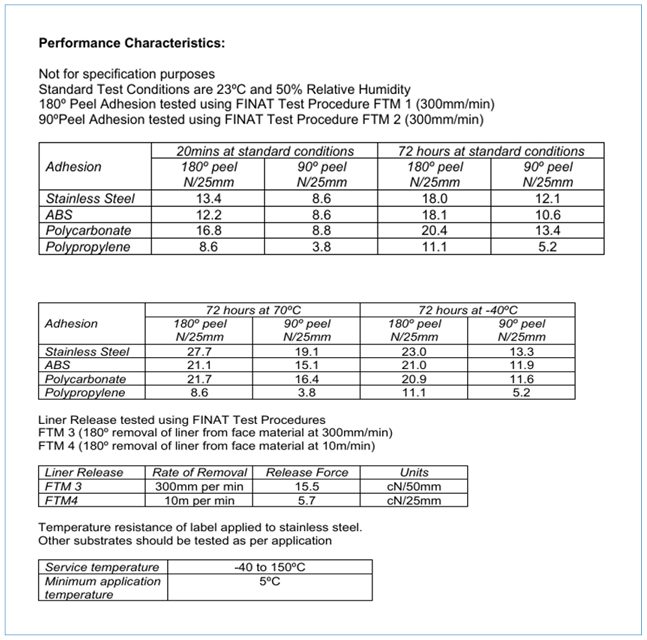
Research has been done to choose the most appropriate label for use on a variety of materials. For best bonding conditions, application surface should be at room temperature or higher. Low temperature surfaces below 5ºC can cause the adhesive to become so firm that it will not develop maximum contact with the substrate. Higher initial bonds can be achieved through increased rubdown pressure.
Performance Characteristics of Labels – Manufacturer’s Specifications
CERTIFIRE
What about Certifire?
The schemes in Certifire are being developed in parallel to accommodate EN classification of products, as well as performance against EN test standards, and will be introduced through a phased approach. As with all our new or revised certification schemes, these developments will be supported by technical information and opportunities for discussion and questions through product led sector panels.
SUPPORTING EVIDENCE
At what point, if at all, will Warringtonfire stop creating Field of Applications and will the validity period shorten?
At present, we are continuing to provide all Field of Applications with full 5-year validity. The removal of the BS 476 series of standards is from Approved Document B (England). Although the majority of the BS 476 series will be withdrawn by BSI, it does not mean the standards cannot be used. We expect assessments of product performance outside of EN classification to continue but they will not be used to demonstrate EN classification.
I have existing BS EN test evidence. Can you tell me where the gaps are to retain my BS scope?
Yes, we can. We have a team of experts within the Warringtonfire technical team who can undertake a scope analysis and test programme to review your existing BS EN test evidence. We will provide advice on the DIAP and EXAP scope you might get and what you’ll need to test to retain all or most of your BS 476 scope. This is, however, a chargeable exercise and is applied for directly with the technical team through your BM TRADA client manager or direct to fire.resistance@warringtonfire.com.
What can I do to speed up the process of obtaining a classification of my doorset system to EN 13501-2?
You must be able to define your required product range and desired performance (i.e. fire resistance and smoke control requirements, e.g. E60-Sa4). This will speed up the processes required to obtain the desired classification as it will allow us to navigate your end-goal objectives using test evidence and associated EXAP rules.
How will Warringtonfire Testing and Certification Limited (t/a Warringtonfire and BM TRADA) help their customers?
Warringtonfire Testing and Certification Limited (t/a Warringtonfire and BM TRADA), part of the Element Group, is committed to supporting our customers in obtaining the necessary scope and EN classification for their products. We are accredited to the relevant European standards, have long-standing experience of preparing extended application reports and classifying construction products using the EN 13501 series of standards, and can continue to provide the required services for testing and certifying manufacturers’ construction products.
Is Warringtonfire Testing and Certification Limited (t/a Warringtonfire and BM TRADA) going to continue supporting third-party certification of products and processes?
Yes. We will continue to strongly advocate UKAS accredited third-party certification of products and processes as a robust means of providing added assurance of product performance beyond the minimum requirements specified in the building regulations.
Revisions
- Version 2, published on 5th June 2026: Updated to include the Q-Mark Fire Door Processing Scheme (EN 13501-2).
Note: The last revised version of this document supersedes all previous versions/revisions.
Related Content

Q-Mark Fire Door and Doorset Manufacturers' Schemes
Third-party certification for fire doors and doorsets helps manufacturers demonstrate quality, traceability and regulatory compliance.

Q-Mark Systems House Scheme
This technical resource is for the updated Systems House Scheme.
Q-Mark Fire Doorset Manufacturing (EN 13501-2) Schemes
This technical resource explains the aims, objectives and fundamental processes of the new Fire Doorset Manufacturing Schemes (EN 13501-2).

Minimum Criteria for Supporting Evidence of Third Party Certification using EN 13501 Classification Series
This technical resource explains the minimum criteria for supporting evidence used within the voluntary third party certification schemes we operate for EN classification of construction products using the EN 13501 series.
Minimum Criteria for Supporting Evidence of Third Party Certification outside of EN 13501 Classification Series
This technical resource explains the minimum criteria for supporting evidence, used within the voluntary third party certification schemes we operate, when considering the performance of construction products if they were to be tested to a relevant test standard outside of classification to the EN 13501 series.